
There are recipes you find in a book, and then there are recipes that find you.
For my husband’s side of the family—the side that brings the warmth, the spice, and the deep, soulful flavors of Mexico into our December kitchen—the tradition isn’t just about what’s on the table; it’s about the hands-on process and the love poured into every step.
Forget meticulously written cookbooks or precise teaspoons. Our annual holiday cooking is a beautiful, chaotic, and delicious symphony of oral tradition. These are the recipes that come from the kitchen of Maribel Murillo, my husband Meño’s beloved aunt, a culinary matriarch whose wisdom flows not onto paper, but straight into our pots and bowls.
How do we learn them? By showing and doing. It’s a generational dance: watching the masa being worked until it feels just right in your palm, tasting the broth until your tongue agrees it’s perfect, and—perhaps most essential—the occasional, frantic phone call to Aunt Maribel mid-prep: “We’re adding the chiles now! How much water do you use… al ojo?!”
Yes, “al ojo”—or “by eye”—is the only measurement you’ll find here. These dishes defy the tyranny of the measuring cup, requiring the cook’s instinct, a good nose, and the wisdom that only comes from practice.

This December, we’re diving deep into that mill of memory and flavor to share the two iconic recipes that anchor our holiday season:
- Aunt Maribel’s deeply comforting Chicken Posole Rojo.
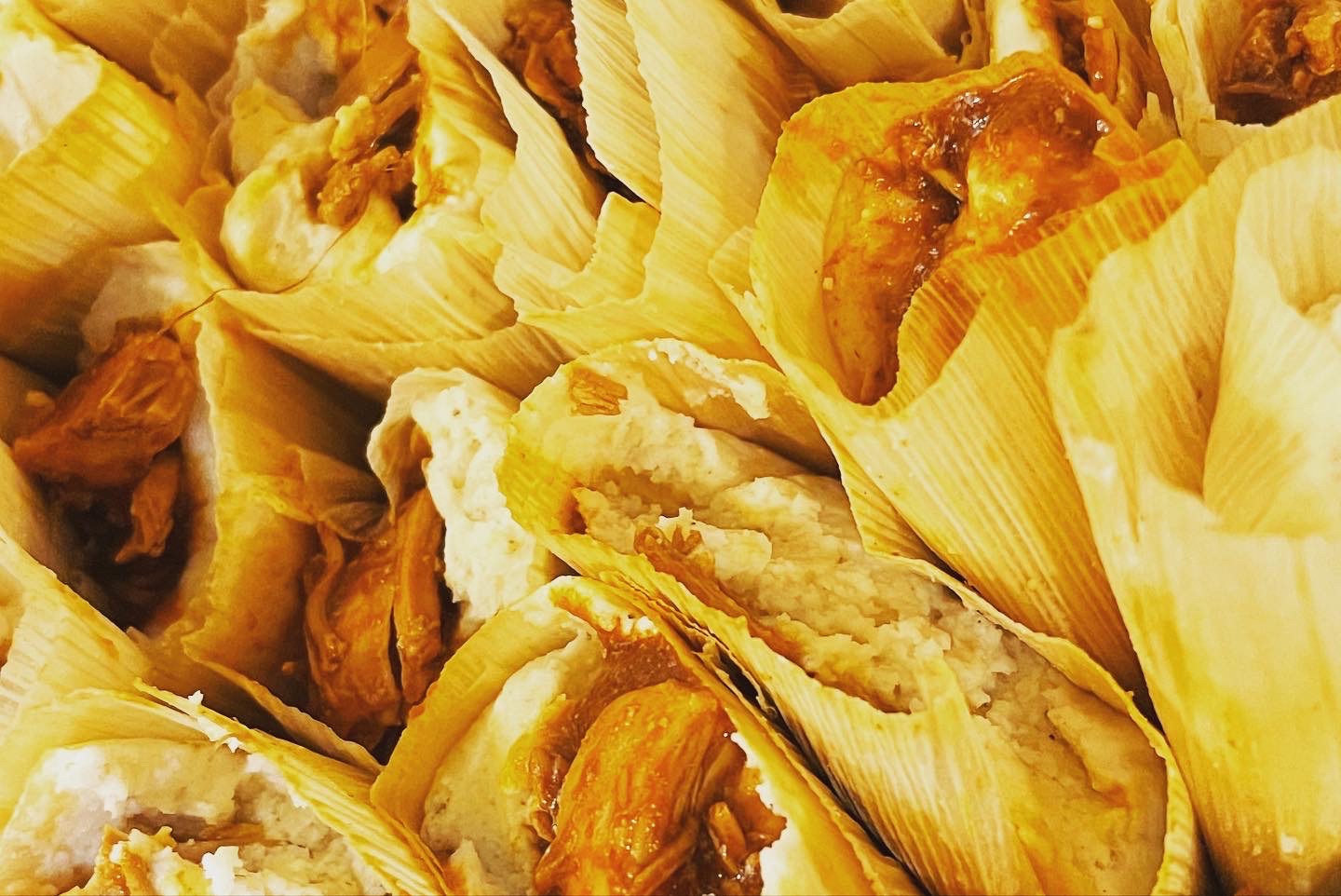
- Her impossibly tender and flavorful Chicken Tamales.
We’re sharing the closest thing we have to a written guide, but please remember: the secret ingredient is the spirit of al ojo. Trust your senses, and don’t be afraid to call a loved one for a little real-time coaching!
Let’s Get Cooking!

🍲 Aunt Maribel’s Posole Rojo (Red Hominy Stew)
(Printer friendly PDF at bottom of page)
“When the hominy has popped open, that’s when you know it’s ready. Add the meat—chicken or pork—and the chile. The hominy holds up well to the heat, and when the broth tastes rich, you know it’s done.”
Ingredients
For the Hominy:
- 2 pounds dried corn (hominy corn)
- 1 tablespoon cooking lime (cal or cal viva)
- Water (about twice the volume of corn)
- 4–6 cloves garlic
For the Chile & Broth
- 2–3 ancho chiles (wide, wrinkled red chiles)
- 8 guajillo or California chiles
- 1 teaspoon cumin
- 3 whole cloves
- 1 teaspoon black pepper
- 1 tablespoon dried oregano (crushed by hand)
- 2–3 pounds chicken or pork
- Salt to taste
Instructions
- Prepare the Hominy:
Boil the corn in plenty of water with the lime—about twice as much water as corn. Simmer until the husks loosen, then turn off the heat and let it rest overnight.
The next day, rinse and scrub the corn until clean and the water runs clear. - Cook the Hominy:
Return the corn to a large pot with garlic and plenty of fresh water. Simmer gently for about 6 hours, until the kernels “pop” open and become tender. - Make the Chile Sauce:
Toast the ancho and guajillo chiles lightly in oil. Remove stems and seeds, soak if needed, then blend with cumin, cloves, and pepper. Add a little broth to make a smooth, rich sauce. - Combine Everything:
Once the hominy is ready, add the meat—pork goes in a bit earlier; chicken later. Pour in the chile sauce, add oregano, and enough broth for a deep, red soup.
Simmer gently until the meat is tender and the flavors blend together, about 45–60 minutes. Taste and adjust seasoning.
To Serve
Top each bowl with:
- Shredded cabbage
- Sliced radishes
- Chopped onion
- Crumbled oregano
- Fresh lime wedges
Serve with warm tostadas or crusty bolillo rolls for dipping into the vibrant red broth.

🫔 Aunt Maribel’s Tamales Rojos de Pollo (Red Chicken Tamales)
(Printer friendly PDF at bottom of page)
“Since I get tired easily, I make the mole the day before. I keep the meat in the refrigerator and leave the mole out because it’s still hot. The next day, I’m ready to make tamales.”
Ingredients
For the Red Mole Filling
- 8 guajillo or California chiles
- 2 ancho chiles
- 6–10 small tomatillos (optional, for a subtle tang)
- 1 teaspoon cumin
- 3 whole cloves
- 1 teaspoon black pepper
- 2 pounds chicken, boiled and shredded
- Chicken broth (reserved from boiling the chicken)
- 1–2 handfuls of flour (for thickening)
- Salt to taste
For the Masa
- 4–6 cups masa harina for tamales
- 1 cup melted lard or (we prefer butter)
- About 4 cups warm chicken broth (adjust as needed)
- 1 tablespoon baking powder (Royal)
- 1 tablespoon salt
- Corn husks, soaked and washed
Instructions
- Make the Mole:
Toast the dried chiles, cumin, cloves, and pepper. Soak the chiles in hot water until soft, then blend them with the spices and tomatillos.
Strain into a pot, bring to a gentle boil, and add salt to taste. Mix a handful or two of flour with some broth and slowly stir it into the sauce to thicken.
Let it cool slightly, then stir in the shredded chicken until well coated. - Prepare the Masa:
In a large bowl, mix masa harina, lard, baking powder, and salt. Slowly add warm broth until the dough is soft and slightly runny—like cake batter. Beat until fluffy and smooth. - Assemble the Tamales:
Spread a spoonful of masa onto a soaked corn husk. Place a spoonful of the chicken mole in the center. Fold the sides inward, then fold up the bottom to close. - Steam the Tamales:
Stand the tamales upright in a steamer, open side up. Steam for about 2 hours, or until the masa pulls away cleanly from the husk.
To Serve
Let them rest for 5–10 minutes before serving.
Enjoy warm with crema, a spoonful of salsa, or a comforting cup of champurrado.
❤️ Cooking from the Heart
Every tamal and every bowl of pozole tells a story—of family, memory, and the patience of generations who learned not from recipes, but from rhythm.
In Aunt Maribel’s kitchen, no two batches ever taste quite the same, and that’s the beauty of it. Cooking al ojo is cooking with trust—with your hands, your senses, and your heart.
As she says best:
“It doesn’t matter if you add a little extra lime—it won’t hurt it. The important thing is to taste and see if it’s to everyone’s liking.”
This Christmas, we hope these recipes find their way into your kitchen—and maybe, one day, into someone else’s memory of home.





Leave a Reply